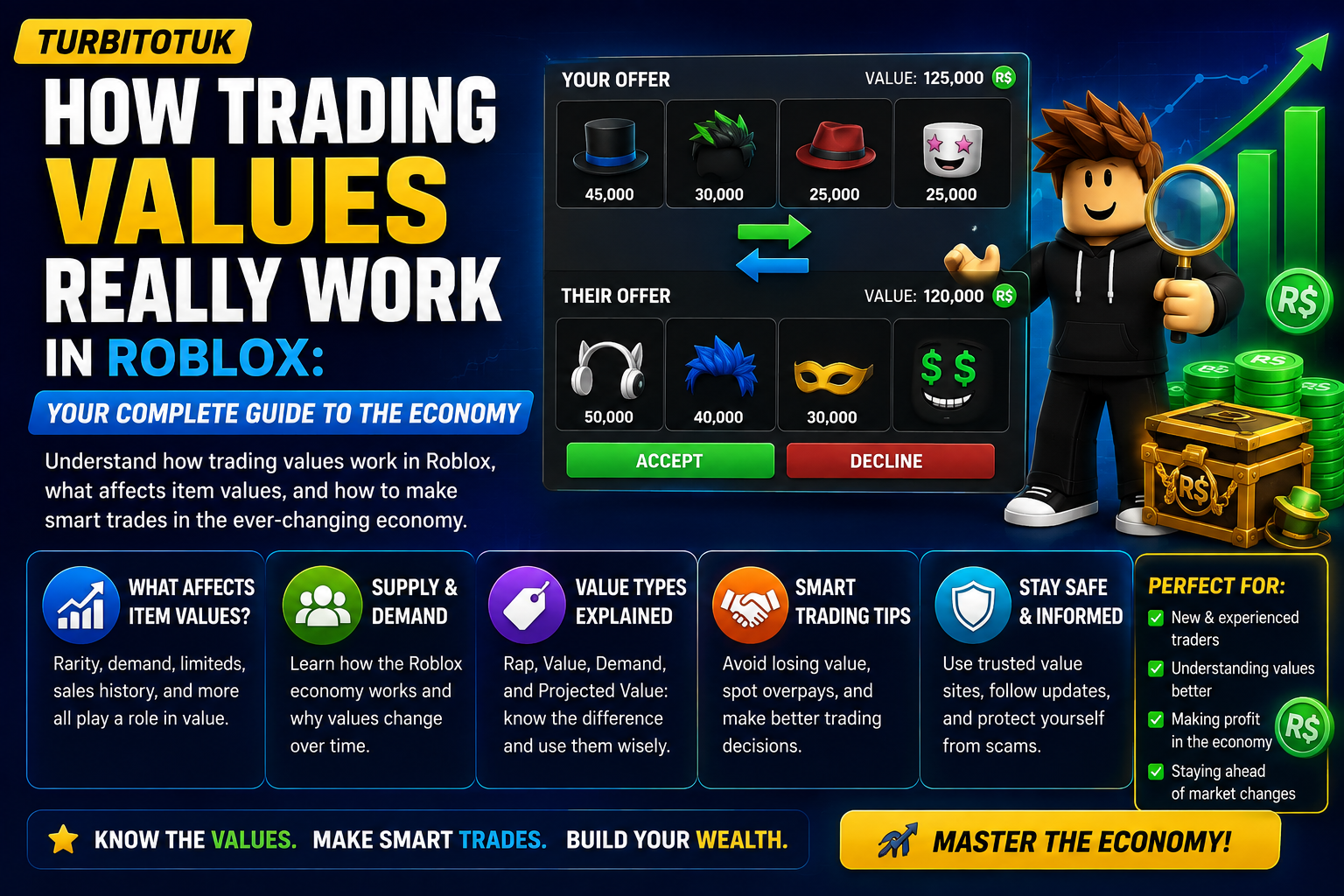
If you’ve ever stepped into the Roblox marketplace looking to trade, you’ve probably wondered: how do trading values actually work? The answer isn’t as simple as it looks. It’s a whole ecosystem built on rarity, demand, and what the community decides something is worth. I’ve spent enough time browsing trades and getting burned to understand this system inside out, and I’m going to break it down for you.
What Are Trading Values and Why They Matter
Trading values in Roblox aren’t set by the company—they’re set by the community. When you own a limited item (an item no longer sold on the marketplace), you can trade it or resell it if you have an active Roblox Premium subscription. That’s where trading values come into play. The price you see listed isn’t random; it’s calculated based on actual recent sales.
Recent Average Price (RAP): The Heart of Trading Values
RAP is probably the most important concept you need to understand about how trading values work. It stands for Recent Average Price, and it’s basically the average selling price of an item over a recent period. This number updates constantly based on what people are actually buying and selling items for. When you’re checking a limited item, the RAP tells you what that item has been worth lately—not what someone is asking for it, but what it’s genuinely traded at.
I’ve noticed that RAP isn’t static either. If someone buys an item for way above the current RAP, it shifts the average upward. That’s why you sometimes see items spike in value overnight—a big sale happened. Tools like Rolimons track this data across the entire Roblox economy, and honestly, they’re essential when you’re trying to make smart trading decisions.
Limited Items: The Foundation of Trading Values
Limited items are the only things you can actually trade in Roblox (besides Robux). These are collectibles that were sold for a set price, then taken off-sale. Once that happens, only Premium subscribers can resell them. The scarcity is what creates value. A hat that was sold to thousands of players might be worth way less than a hat that was only available for one day back in 2015. Rarity directly impacts trading values.
Here at Turbitotuk, we track how limited items evolve, and you’d be surprised how fast values can swing. Some vintage accessories like Dominus or Valkyrie have been stable for years, while newer UGC (User-Generated Content) limited items can spike or crash based on trends.
How Demand Affects Trading Values
Rarity isn’t the only factor—demand matters just as much. A limited item nobody wants won’t hold value, even if there are only five copies in existence. Some traders call this ‘emotional value.’ A classic Fedora might be worth more to an old-school player chasing nostalgia than to someone hunting new event drops. Turbitotuk sees this pattern constantly: items go in and out of fashion, and their trading values fluctuate with the hype cycle.
2025 has brought a resurgence of vintage accessories alongside new seasonal UGC rares. Items from major brand collaborations (like NikeLand or Spotify Island) tend to hold solid value because they’re tied to limited events. The market rewards scarcity + desirability—both have to line up.
The Mechanics: Trading Fees and Robux Caps
Before you finalize any trade involving trading values you need to understand the fees. There’s a 30% transaction fee on any Robux included in a trade. That means if you add 1,000 Robux to a deal, only 700 actually reach the other player. Also, there’s a Robux cap: you can’t add more than 50% of your item’s current value in Robux (calculated after fees).
Example: if your item is worth 300 Robux, you can only add up to 150 Robux post-fee. These rules exist to prevent exploitation, but they definitely change how negotiations work. You’re not just trading items—you’re working within these constraints.
Holding Periods: Time Locks on Trading Values
Here’s something that frustrated me when I first started: you can’t instantly resell or trade items. If you purchase a limited item, there’s a 7-day holding period before you can resell it. If you receive an item through a trade, it’s 2 days. This matters because prices can shift during your holding period, and you’re locked out. It’s Roblox’s way of preventing market manipulation, but it’s important to factor in when you’re calculating potential trading values.
Reading the Market: Price Charts and Resellers
When you look at a limited item’s page, you’ll see the Price Chart tracking average prices over 30, 90, or 180 days. You’ll also see a Resellers list showing everyone currently selling that item, sorted from lowest to highest price. This is crucial data for understanding realistic trading values. The lowest price listed is what that item is actually going for right now in the real market.
I’ve made the mistake of pricing my items above everyone else and wondering why nobody was buying. The market sets the price, not your wishlist. Understanding this helped me stop overvaluing my inventory and start making trades that actually work.
What Drives Value Changes in Roblox Trading
- Supply Shock: If someone hoards a rare item and suddenly lists 50 copies, the trading values crash. Yes, this actually happens.
- Trend Cycles: Seasonal items and event-exclusive drops gain value temporarily, then stabilize or drop once the hype fades.
- Community Consensus: Trading value lists maintained by experienced traders and communities (like the ones you see on third-party sites) heavily influence prices.
- New Event Releases: When Roblox drops new limiteds, older similar items sometimes lose value as players chase the new hotness.
- Account Age & Prestige: Vintage items from the early days of Roblox command premium trading values just because of their history.
How to Use Trading Values Responsibly
Don’t treat trading values like stock tips. Use them as a guide, not gospel. Price charts show historical averages, not predictions. RAP is more reliable than asking prices because it reflects actual completed trades. And always—always—check multiple sources before committing to a major trade. Third-party sites exist specifically to give you this data, and using them is free and legal.
The biggest mistake I see newer traders make is falling in love with an item and overpaying. The market doesn’t care about your attachment. Stick to the trading values reflected in RAP and recent sales, and you’ll make smarter decisions.
Related content
Frequently Asked Questions
What’s the difference between RAP and asking price in Roblox trading?
RAP (Recent Average Price) is the average of actual completed sales over a recent period, while asking price is what a seller wants right now. RAP is more reliable because it’s based on real trades. The asking price is just a request—the RAP tells you what the item actually sells for.
Why can’t I trade items immediately after buying them?
Roblox enforces a 7-day holding period on purchased items and 2 days on traded items to prevent market manipulation and scams. This lock-in period is built into the system to protect the economy. You’ll need to wait before you can resell or re-trade.
Do trading values ever go down?
Yes, absolutely. If supply increases (someone hoards an item and floods the market), if demand drops (hype fades), or if a newer version comes out, trading values can crash. Some items lose value slowly over time, while others drop overnight. Always check the price trend before trading.
Can I trade with players outside my region, and do trading values change by region?
You can trade with most players globally, but trading is currently restricted for users in South Korea. Trading values are universal across all regions—there’s one global Roblox economy. Both players just need Premium membership and have trading enabled in their privacy settings.
Conclusion
Trading values in Roblox aren’t magic—they’re the result of supply, demand, and community consensus. If you understand RAP, respect the market data, and follow the actual rules (holding periods, fees, caps), you’ll make way smarter trading decisions. The economy rewards knowledge and patience, not impulse. Start reading price charts, compare your items against RAP, and trade smart. Drop a comment below if you’ve had any trading wins (or fails) worth sharing—Turbitotuk loves hearing your real stories.